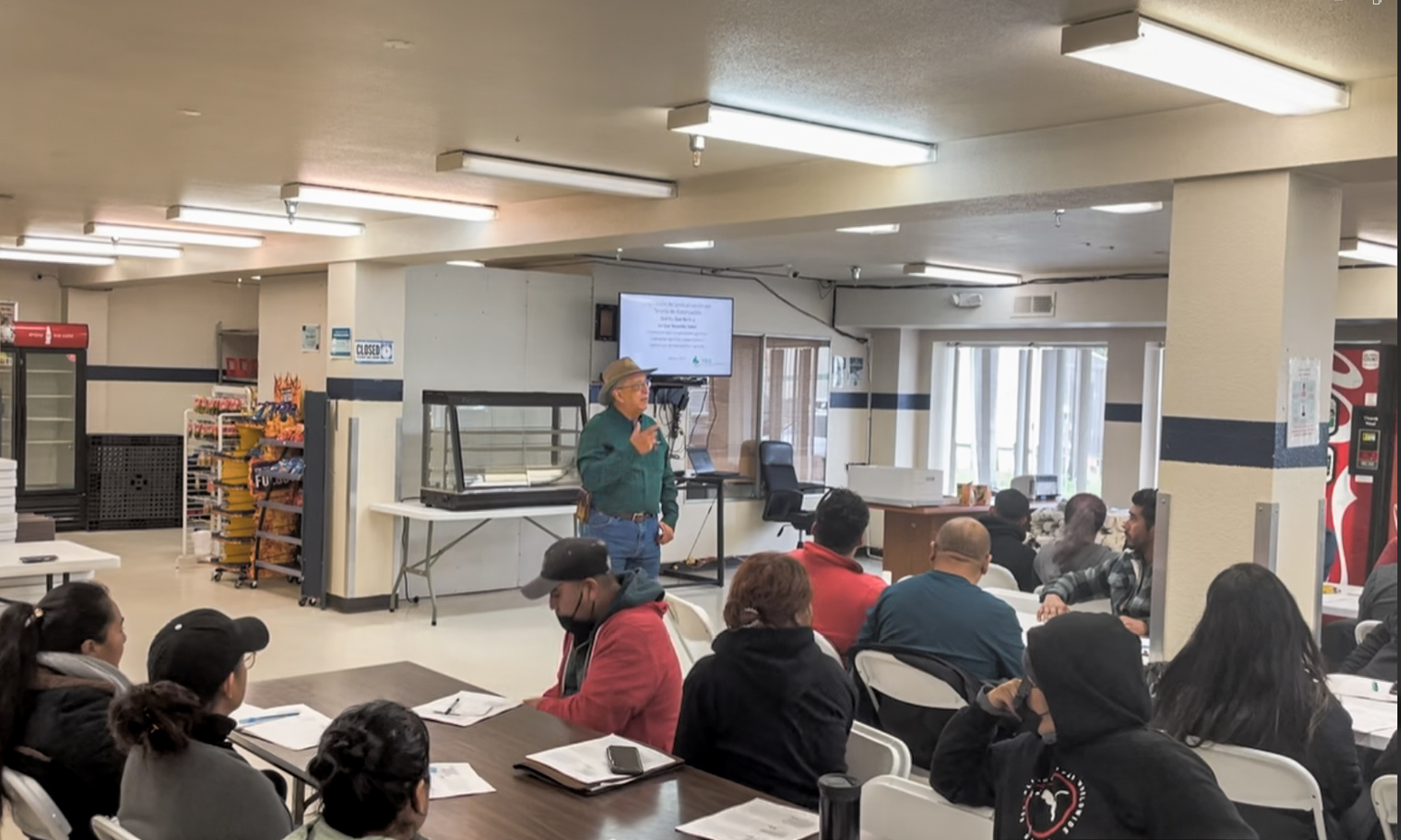
OSHA Top Violations Series #6: Hazard Assessment and Inspection Procedures
An IIPP should not sit on a shelf. Regular workplace inspections help employers identify hazards before they result in an injury—or a Cal/OSHA citation.
As part of FELS’ ongoing series examining common Cal/OSHA compliance issues affecting California agricultural employers, #6 focuses on hazard assessment and workplace inspection procedures, an important component of every effective Injury and Illness Prevention Program (IIPP).
California employers are required under Title 8, California Code of Regulations, Section 3203 to “establish, implement and maintain an effective Injury and Illness Prevention Program.” Among the required elements is a process for identifying and evaluating workplace hazards.
Specifically, Section 3203(a)(4) requires employers to include:
“Procedures for identifying and evaluating workplace hazards including scheduled periodic inspections to identify unsafe conditions and work practices.”
That word—scheduled—is important. Hazard assessments should not happen only after an accident, when a supervisor happens to notice a problem, or when Cal/OSHA arrives. Employers should establish a regular process for looking for unsafe conditions and work practices and correcting what they find.
When Are Inspections Required?
Section 3203(a)(4) specifically requires inspections when:
- The IIPP is first established;
- New substances, processes, procedures or equipment are introduced that represent a new occupational safety and health hazard; and
- The employer becomes aware of a new or previously unrecognized hazard.
For an agricultural operation, think about how frequently conditions change. A new tractor or piece of harvesting equipment arrives. Harvest begins and seasonal employees return. Employees move from field work into a packing operation. A new chemical is introduced. Night work begins. A different harvesting method is implemented.
Each change is an opportunity to ask: Has this created a new hazard, and does our IIPP still adequately address it?
What Should You Be Looking For?
There is no single checklist that fits every agricultural workplace. An effective assessment should reflect the employer’s actual operation, equipment, employees and working conditions.
Depending on the operation, an inspection might consider:
- Equipment and machinery guarding;
- Tractors, ATVs, forklifts and other mobile equipment;
- Electrical hazards and exposed wiring;
- Ladders, elevated work and fall hazards;
- Chemical storage, labeling and Safety Data Sheets;
- Personal protective equipment;
- Employee lifting and material-handling practices;
- Walkways, work surfaces and housekeeping;
- Emergency equipment and procedures;
- Heat illness prevention requirements, including water and shade;
- Field sanitation;
- Lighting for nighttime operations; and
- Unsafe employee work practices observed during the inspection.
Don’t limit the assessment to physical objects. Section 3203 specifically requires employers to identify both unsafe conditions and unsafe work practices. A machine may be properly guarded, for example, but employees may have developed an unsafe method of clearing jams or performing maintenance. Observing how work is actually performed can be just as important as inspecting the equipment itself.
Just a few years ago, I was helping a company with their safety programs. As part of the evaluation, I observed employees work with, in and around equipment. The employees regularly cleared a jammed augur in a fertilizer spreader, by getting in and using the handle of a rake. This is why we do hazards assessments; they require us to get out and really look at the practices within our operation.
Finding the Hazard Is Only Half the Job
An inspection that identifies a hazard but doesn’t result in corrective action leaves the employer exposed.
Under Section 3203(a)(6), the IIPP must contain methods or procedures for correcting unsafe or unhealthy conditions, work practices and procedures in a timely manner based upon the severity of the hazard.
If an imminent hazard cannot immediately be corrected without endangering employees or property, exposed employees must be removed from the area, except for those necessary to correct the condition—and those employees must receive appropriate safeguards.
A good inspection process therefore follows a simple progression:
Identify → Document → Correct → Verify
When something is found, document what was observed, determine who is responsible for correcting it, establish when it will be corrected, and follow up to make sure the correction actually occurred.
Documentation Matters
Section 3203(b)(1) requires records of scheduled and periodic inspections to include:
- The person or persons conducting the inspection;
- The unsafe conditions and work practices identified; and
- The action taken to correct them.
Generally, those inspection records must be maintained for at least one year, although Section 3203 contains an exception allowing employers with fewer than 10 employees to maintain inspection records only until the hazard has been corrected.
FELS’ Hazard Assessment Form can help employers establish a more systematic inspection process. The form provides space to identify the inspection item or area, designate the person qualified to perform the inspection, and determine whether inspections should occur weekly, monthly, quarterly, semiannually, annually or prior to the season.
The important point isn’t that every item needs to be inspected at the same interval. Rather, employers should consider the hazards associated with their particular operation and establish an inspection schedule appropriate for those hazards.
Make Hazard Assessment Part of Your Operation
One of the easiest mistakes an employer can make is treating the IIPP as a document that is completed once and then filed away.
Section 3203 requires the program to be established, implemented and maintained.
Consider asking yourself:
- Do we have an IIPP—and does it accurately reflect what we’re doing today?
- Are we conducting and documenting our scheduled workplace inspections?
- Have we added new equipment, chemicals, processes or work practices since our last assessment?
- When we identify a hazard, can we show what we did to correct it?
If the answer to any of these questions is uncertain, now is a good time to review your program.
How FELS Can Help
FELS can help members move beyond simply having an IIPP to actually using and maintaining it.
If you haven’t reviewed your IIPP recently, have added a new piece of equipment, changed a work practice, started a new operation, or simply aren’t sure whether your hazard assessment process reflects your workplace today, contact FELS.
Our Labor Management Consultants can help employers review their existing IIPP, evaluate whether it reflects current operations, identify areas that may need updating, and help establish practical hazard-assessment and inspection procedures.
Don’t wait for an injury—or a Cal/OSHA inspection—to find out that your IIPP no longer matches your operation.
Regulatory Reference: California Code of Regulations, Title 8, §3203, Injury and Illness Prevention Program.