Cal/OSHA Top 10 Violations in Agriculture: Part 5 – Heat Illness Prevention – Access to Water
Water is one of the simplest protections against heat illness—and one of the most important.
As FELS continues its series examining common Cal/OSHA violations affecting California agriculture, violation #5 brings us back to the Heat Illness Prevention Standard, notice a trend here? This time, the focus is on one of the most basic requirements: providing employees with adequate access to drinking water.
For California agricultural employers, putting a water container somewhere at the worksite is not enough. California Code of Regulations, Title 8, Section 3395(c), establishes specific requirements regarding the quantity, quality, location and availability of drinking water for employees working outdoors.
What Does Cal/OSHA Require?
Under Section 3395(c), employees must have access to potable drinking water that is fresh, pure, suitably cool and provided free of charge. Water must also be located as close as practicable to the areas where employees are working.
When water is not plumbed or continuously supplied, employers must provide enough water at the beginning of the shift to allow for at least one quart per employee per hour for the entire shift.
That works out to four 8-ounce glasses of water per employee, per hour.
Employers may begin the shift with less than the total amount needed for the day, but only when they have effective procedures to replenish the supply throughout the shift so employees can drink one quart or more per hour. Practical reminder, do not take ALL of the water containers to be refilled at the same time, leaving no water in the field.
Cal/OSHA also requires employers to encourage employees to drink water frequently. The standard’s employee training requirements specifically address the importance of consuming small quantities of water frequently—up to four cups per hour when employees are working in hot conditions and sweating more than usual.
Cal/OSHA Outdoor Heat Illness Prevention Standard – Section 3395
Access Matters, Too
One important phrase in the regulation is easy to overlook: water must be located “as close as practicable” to where employees are working.
Consider a crew moving through an orchard, vineyard or field during the day. A water container that was conveniently located at the beginning of the shift may no longer be reasonably accessible several hours later.
Employers and supervisors should continually consider where crews are working and whether the water supply is moving with them. Employees should not have to travel an unreasonable distance, wait for transportation or otherwise be discouraged from getting a drink.
Cal/OSHA summarizes the requirement simply: employers must provide enough fresh water for each employee to drink at least one quart per hour and encourage them to do so.
Supervisors Play an Important Role
Compliance doesn’t stop when the water containers are filled in the morning.
Supervisors and crew leaders are often the people responsible for making sure an employer’s heat illness prevention procedures are actually being followed in the field. They should know:
- How much water needs to be available based on the number of employees and length of the shift.
- Who is responsible for checking and replenishing water supplies.
- Where water should be positioned as crews move throughout the workday.
- How to ensure drinking water remains clean and suitably cool.
- That employees should be encouraged to drink water frequently rather than waiting until they feel thirsty.
- What signs and symptoms of heat illness require immediate action.
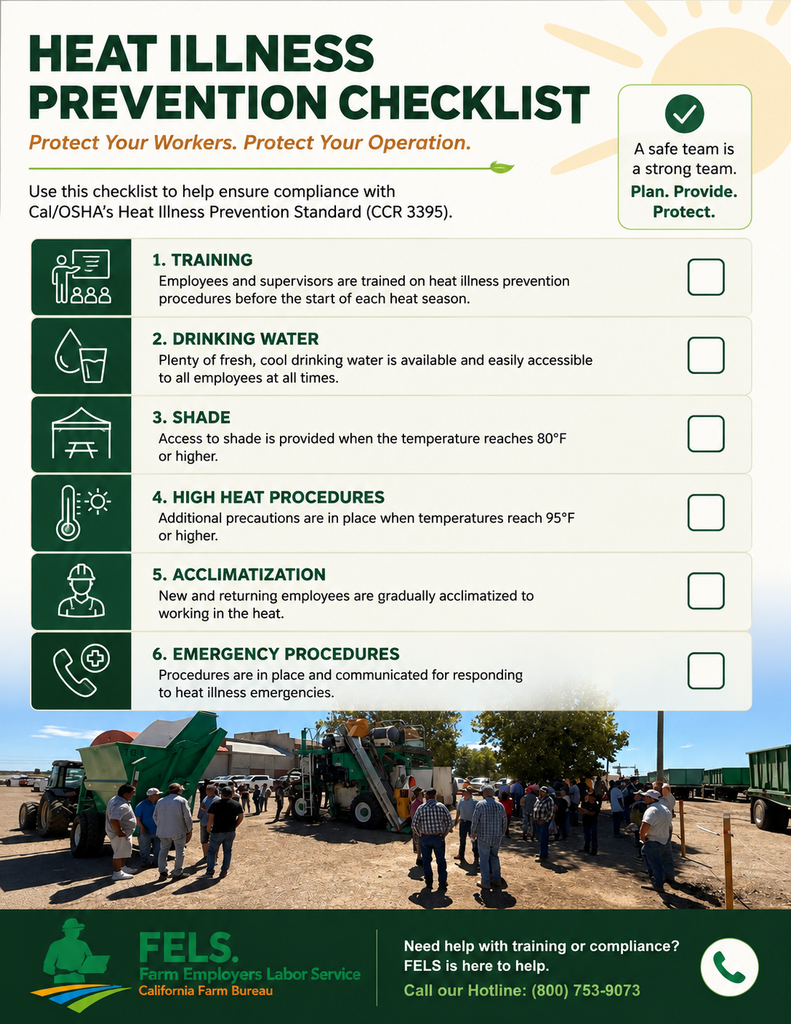
These responsibilities become even more important during high heat. When temperatures reach 95°F or higher, Section 3395’s high-heat procedures apply to agriculture and other covered industries. Among those requirements, employers must remind employees throughout the shift to drink plenty of water and conduct pre-shift meetings addressing high-heat procedures.
Training Employees Is Equally Important
Employees also need to understand that heat illness prevention is a shared safety responsibility.
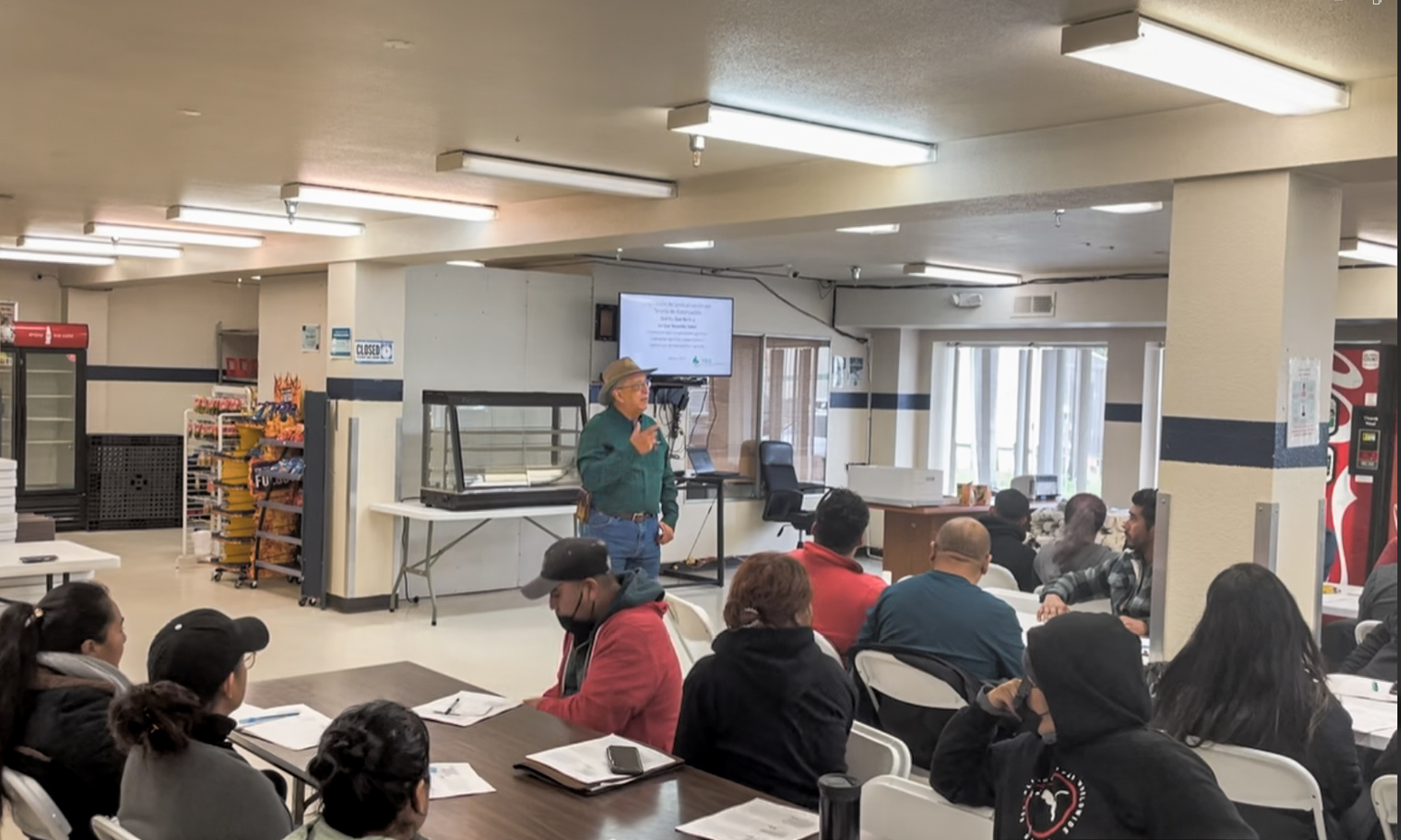
Cal/OSHA requires heat illness prevention training for both employees and supervisors. Employees should understand the importance of frequent water consumption, recognize the signs and symptoms of heat illness, know their employer’s procedures, and immediately report symptoms in themselves or a coworker.
Training should reinforce a simple message: don’t wait until you feel sick—or even until you feel thirsty—to drink water.
Employers should also make sure employees understand that drinking water, taking required preventative cool-down rests and reporting symptoms of heat illness are workplace safety measures—not inconveniences that interfere with getting the job done.
The Cost of Getting It Wrong Is Increasing
Failure to comply with California’s workplace safety standards can also be expensive.
Cal/OSHA periodically adjusts certain civil penalties for inflation. For citations issued beginning January 1, 2025, the maximum penalty for a general or regulatory violation increased to $16,285, while willful and repeat violations could carry maximum penalties of $162,851. Serious violations remained subject to penalties of up to $25,000. The actual classification and penalty depend on the circumstances of the violation.
Those numbers are another reason employers should look beyond simply having a written Heat Illness Prevention Plan. The procedures in that plan must be implemented in the field every day.
FELS Compliance Check
Before the next hot workday, ask:
1. Quantity: Do we have a system to ensure at least one quart of drinking water per employee per hour is available throughout the entire shift?
2. Access: As our employees move through fields, orchards or vineyards, is their drinking water still located as close as practicable to where they are working?
3. Responsibility: Do our supervisors and employees understand their responsibilities under our Heat Illness Prevention Plan—including replenishing water, encouraging employees to drink frequently and responding to symptoms of heat illness?
If the answer to any of these questions is uncertain, now is the time to address it.
How FELS Can Help
Heat illness prevention is about more than having the right policy in a binder. Employers need supervisors who understand the requirements and employees who know how to protect themselves and their coworkers.
Farm Employers Labor Service (FELS) can provide heat illness prevention training for both supervisors and employees, helping agricultural employers turn regulatory requirements into practical procedures in the field.
FELS Labor Management Consultants can work with employers and their teams to review heat illness prevention requirements, reinforce responsibilities for water, shade, high-heat procedures and emergency response, and help supervisors understand their role in maintaining compliance.
Training employees is equally important. Workers need to understand why drinking water frequently matters, how to recognize the signs of heat illness, when to speak up and what to do when they or a coworker begin experiencing symptoms.
The goal isn’t simply to avoid a Cal/OSHA citation. It is to make sure everyone goes home safely at the end of the workday.
Need help reviewing your Heat Illness Prevention Program or scheduling training for your employees or supervisors? Contact FELS to learn how our Labor Management Consultants can help.