The Top 10 Cal/OSHA Violations in Agriculture: Part 1 – Heat Illness Prevention
One of the greatest values FELS provides for our members is helping ag employers stay ahead of compliance issues before they become costly citations—or worse, workplace injuries.
Over the next several weeks, we’ll be launching a new article series focused on the Top 10 Cal/OSHA Violations in Agriculture. In each edition, we’ll take a practical look at one of the most frequently cited standards, explain what inspectors are looking for, highlight common mistakes, and share simple steps you can take to protect both your employees and your operation.
We’re beginning with a topic that continues to be one of Cal/OSHA’s highest enforcement priorities: Heat Illness Prevention.
More Than Just Water and Shade
California’s Heat Illness Prevention Standard (Title 8, Section 3395) has been in place for nearly two decades, yet heat-related violations remain among the most frequently cited in agriculture.
The good news is that many of these citations are entirely preventable.
One of the biggest misconceptions is that Cal/OSHA only issues citations after an employee suffers a heat illness. In reality, inspectors are looking at whether employers have implemented the required prevention measures before an incident ever occurs.
Where Employers Are Receiving Citations
During inspections, Cal/OSHA commonly identifies deficiencies in several key areas:
- No written Heat Illness Prevention Plan or a plan that is not being implemented.
- Employees or supervisors who have not received the required heat illness training.
- Failure to provide sufficient, cool drinking water close to the work area.
- Failure to provide adequate shade when temperatures exceed 80°F.
- Failure to implement High Heat Procedures when temperatures reach 95°F or higher, including observation systems, communication procedures, and pre-shift safety meetings.
- Inadequate emergency response procedures, including not knowing how to quickly direct emergency responders to a worksite.
- Failure to properly acclimatize new or returning employees during periods of high heat.
- Missing documentation, including training records and inspection records.
These are not simply paperwork violations. Each requirement exists because it has been proven to reduce the risk of heat illness, heat stroke, and fatalities.
The Cost of Non-Compliance
Cal/OSHA has significantly increased its maximum civil penalties in recent years.
Beginning in 2025, employers can face these increased penalties:
- The maximum penalty for general and regulatory violations, including posting and recordkeeping violations, is $16,285.
- The maximum penalty for willful and repeat violations is $162,851.
- The maximum penalty for violations classified as serious is $25,000; it did not increase.
- The minimum penalty for willful violations is $11,632.
It’s important to remember that inspections often result in multiple citations, not just one. A single heat illness inspection could identify deficiencies related to training, water, shade, written procedures, emergency response, and high heat protocols—each carrying its own potential penalty.
In one recent enforcement case, Cal/OSHA cited a Southern California employer $276,425 after investigators found employees working outdoors without adequate drinking water and without the required heat illness training. The case serves as a reminder that the cost of failing to prepare can be substantial.
Prevention Is Always the Better Investment
The cost of compliance is relatively small when compared to the financial and human cost of a serious heat illness incident.
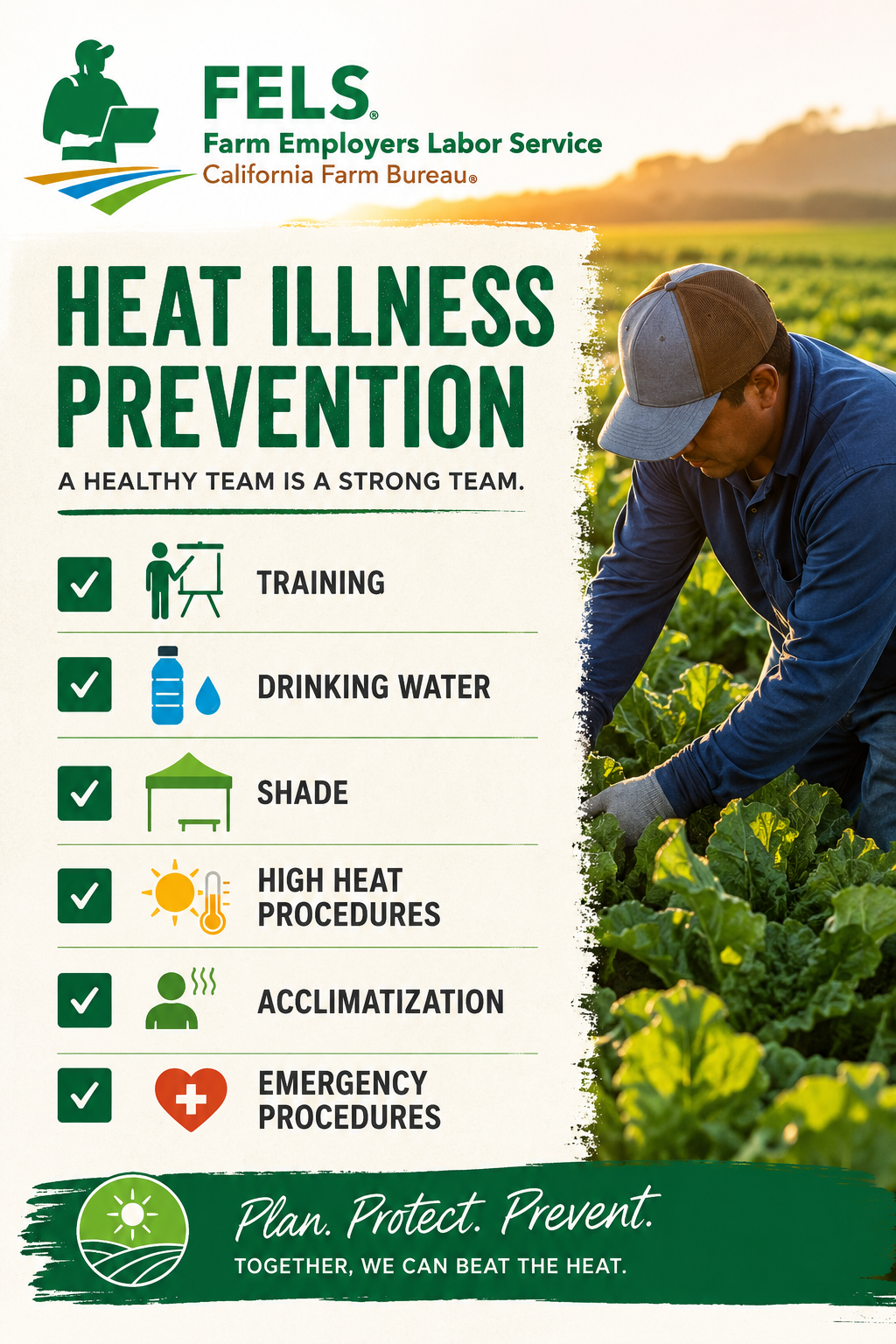
Providing cool drinking water, accessible shade, effective training, written procedures, and engaged supervisors requires planning—but these preventive measures help protect employees while significantly reducing an employer’s exposure during a Cal/OSHA inspection.
Research also shows that the risk of heat illness is greatest during the first few days of a heat wave and among employees who are new to the job or returning after time away from work. This makes supervisor awareness and acclimatization procedures just as important as providing water and shade.
How FELS Can Help
At FELS, our Labor Management Consultants work with agricultural employers every day to strengthen their safety programs before an inspection occurs. Whether it’s reviewing your Heat Illness Prevention Plan, conducting employee and supervisor training, evaluating your High Heat Procedures, or helping you identify compliance gaps, we’re here to help.
Not to mention quick reference guides like “Heat Illness Prevention Duties for Supervisors,” available to FELS Members at no additional cost.
In next month’s newsletter, we’ll continue our series by taking a closer look at another one of Cal/OSHA’s most frequently cited standards affecting California agriculture.
After all, the best time to prepare for an inspection is long before an inspector arrives.
Spoiler Alert: Next up, we’ll navigate all things IIPP compliance.