Before the Storm: Is Your Farm Ready for an Emergency?
California isn’t waiting for the rain to start before preparing for what could be a significant winter—and agricultural employers shouldn’t either.
On September 21, Governor Gavin Newsom proclaimed a state of emergency to strengthen California’s preparations for a potentially historic El Niño season. State officials are preparing for the possibility of heavy rain, strong winds, flooding, landslides, debris flows, power outages and road closures.
For California agriculture, severe weather presents some unique challenges. Employees may be working miles from the main office, crews may move from field to field throughout the day, rural roads can become inaccessible, cell service may be unreliable, and employees may not know the exact address—or even the name of the road—where they are working.
Now is a good time for agricultural employers to review their emergency procedures and ask a simple question:
If something happened at one of our worksites today, would everyone know what to do?
Start With Your Emergency Plan
California’s workplace safety regulations provide a framework for emergency preparedness.
Title 8, California Code of Regulations, Section 3220 addresses Emergency Action Plans. When applicable, an Emergency Action Plan must address important elements such as emergency evacuation procedures, accounting for employees following an evacuation, procedures for employees assigned rescue or medical duties, methods for reporting fires and other emergencies, and identifying the people employees can contact for additional information.
The regulation also requires employers implementing an Emergency Action Plan to designate and train enough employees to assist with a safe and orderly evacuation and to review employees’ responsibilities under the plan.
A plan sitting in a binder, however, won’t be much help during an emergency if employees don’t understand it.
Agriculture’s Remote-Work Challenge
Agricultural employers should pay particular attention to Title 8, Section 3439.
At remote locations, employers must make arrangements in advance for prompt medical attention in the event of a serious injury. Those arrangements can include appropriate transportation, on-site resources or a communication system for contacting medical assistance.
The regulation also requires at least one employee trained in emergency first aid for every 20 employees at a remote location.
Think about what that means in practice.
If a crew is working in an orchard several miles from the nearest paved road, can they call 911? Is there reliable cell service? Can the foreman accurately tell emergency responders where the crew is located? If an ambulance cannot reach the worksite, how will an injured employee be transported to an accessible location?
Cal/OSHA guidance emphasizes the importance of these questions at remote and non-fixed worksites. Employers should be prepared to provide emergency responders with accurate directions and, when necessary, safely transport an employee to a location accessible to emergency medical personnel.
Put the Plan Into Practice
As employers prepare for winter weather, this is an opportunity to go beyond simply checking whether a written plan exists.
Consider walking through realistic scenarios with supervisors and employees:
Communication: How will you reach employees if cell phones don’t work? Consider radios, alternate contacts and a clear chain of communication.
Worksite locations: Make sure supervisors know how to communicate the exact location of crews to emergency responders. GPS coordinates, maps, cross streets, field identifiers and written directions can be valuable—particularly at remote locations.
Evacuation: Identify evacuation routes and alternate routes. A normal entrance or rural road may not be usable during flooding, fallen trees, mudslides or other severe weather.
Employee accountability: Determine who is responsible for accounting for employees following an evacuation. Don’t assume someone else has counted the crew.
Weather monitoring: Decide who will monitor forecasts, watches, warnings, road closures and local emergency notifications—and who has the authority to stop work or move crews when conditions deteriorate.
Power outages: Consider what happens when electricity is lost. Pumps, refrigeration, lighting, communications and other systems may be affected. If generators are used, employees should understand the hazards associated with their operation, including carbon monoxide and electrical hazards.
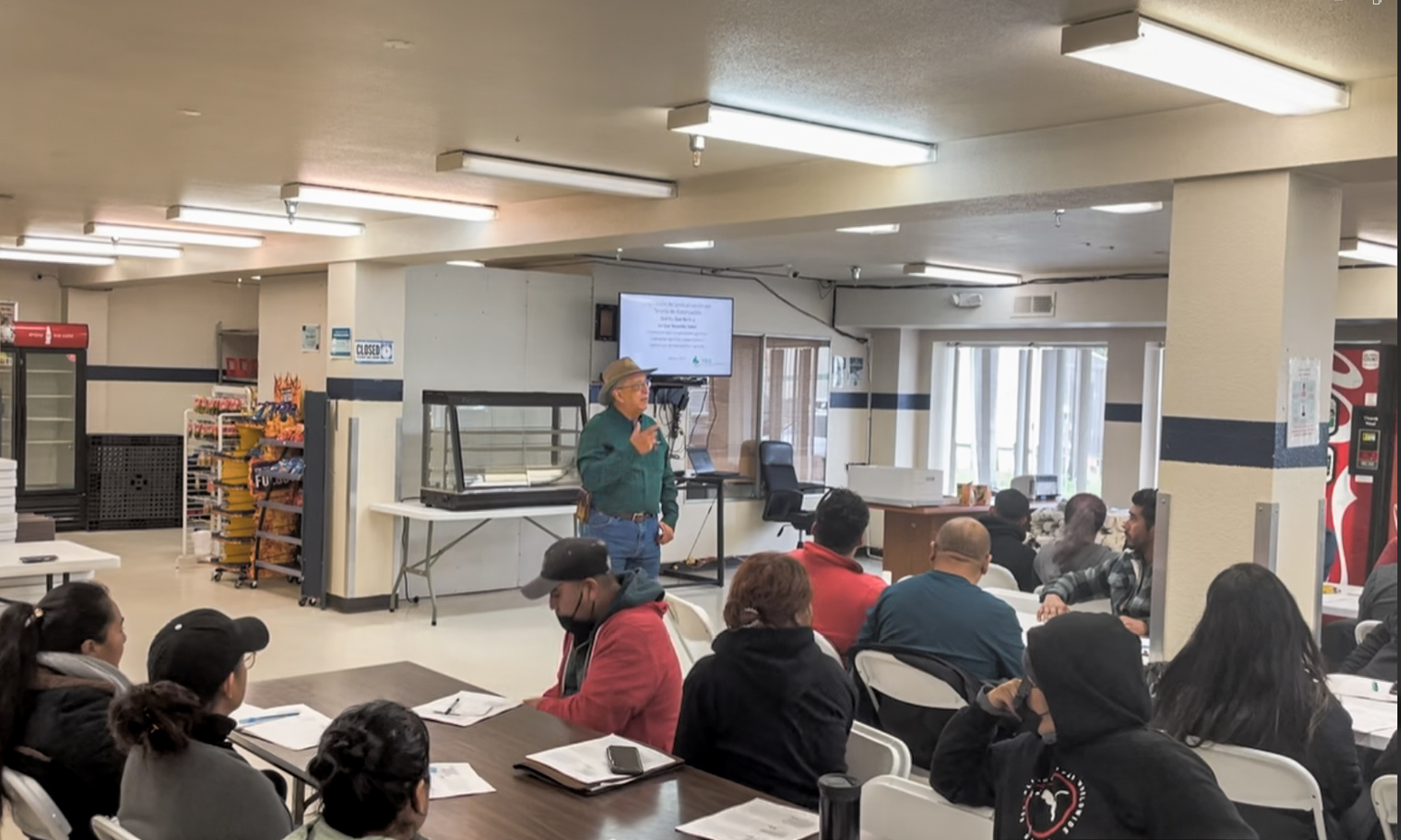
Practice: Don’t wait for an actual emergency to discover that the plan doesn’t work. Conduct drills or tabletop exercises with supervisors and crews. Ask employees to walk through what they would do during a flood, severe storm, medical emergency or evacuation. A practice run can reveal gaps that aren’t obvious on paper.
Preparedness Is More Than Severe Weather
These conversations don’t have to be limited to El Niño. A good emergency response framework can help an operation prepare for wildfires, earthquakes, floods, chemical incidents, medical emergencies, power outages and other unexpected events.
Employers should also review their Injury and Illness Prevention Program (IIPP). Title 8, Section 3203 requires employers to have procedures for identifying and evaluating workplace hazards, correcting unsafe conditions, communicating with employees and providing appropriate training. When employers become aware of a new or previously unrecognized hazard, the IIPP requires them to evaluate and address it.
The goal is to think through the difficult questions before an emergency occurs.
FELS and AgSafe: Emergency Preparedness Webinar Coming Soon ~ October 29th
To help agricultural employers prepare, FELS will partner with AgSafe for an upcoming webinar focused on emergency preparedness for California agriculture.
We’ll review practical steps employers can take to prepare their operations, including emergency planning, communication with remote crews, evacuation procedures, employee accountability, first aid and emergency response, severe-weather preparation, and putting plans into practice through drills and training.
We’ll also bring in a weather expert to discuss the developing El Niño season, what California agriculture may experience in the months ahead, and the types of weather conditions employers should be watching.
The Governor’s emergency proclamation is a reminder that preparedness doesn’t begin when the water starts rising or the power goes out.
The best time to find the gaps in your emergency plan is before you need it.
Watch for additional information from FELS about the upcoming webinar on Oct 29th!