Would You Pass a DPR Inspection? A Practical Look at Handler Compliance
If you’ve ever been stopped by your local County Agricultural Commissioner’s office during a pesticide application, you’ve likely seen DPR’s PR-ENF-104 Pesticide Use Monitoring Inspection Report. This is the inspection form used by county inspectors to evaluate pesticide applications and handler safety in the field. It covers everything from labeling and training to personal protective equipment (PPE), decontamination supplies, and emergency preparedness.
While the form may seem intimidating at first glance, many of the inspection items revolve around one simple goal: making sure employees who handle pesticides go home safely at the end of the day.
Let’s take a closer look at a few of the most important compliance areas every agricultural employer should have dialed in before the inspector arrives.
Handler Training Isn’t a One-and-Done Event
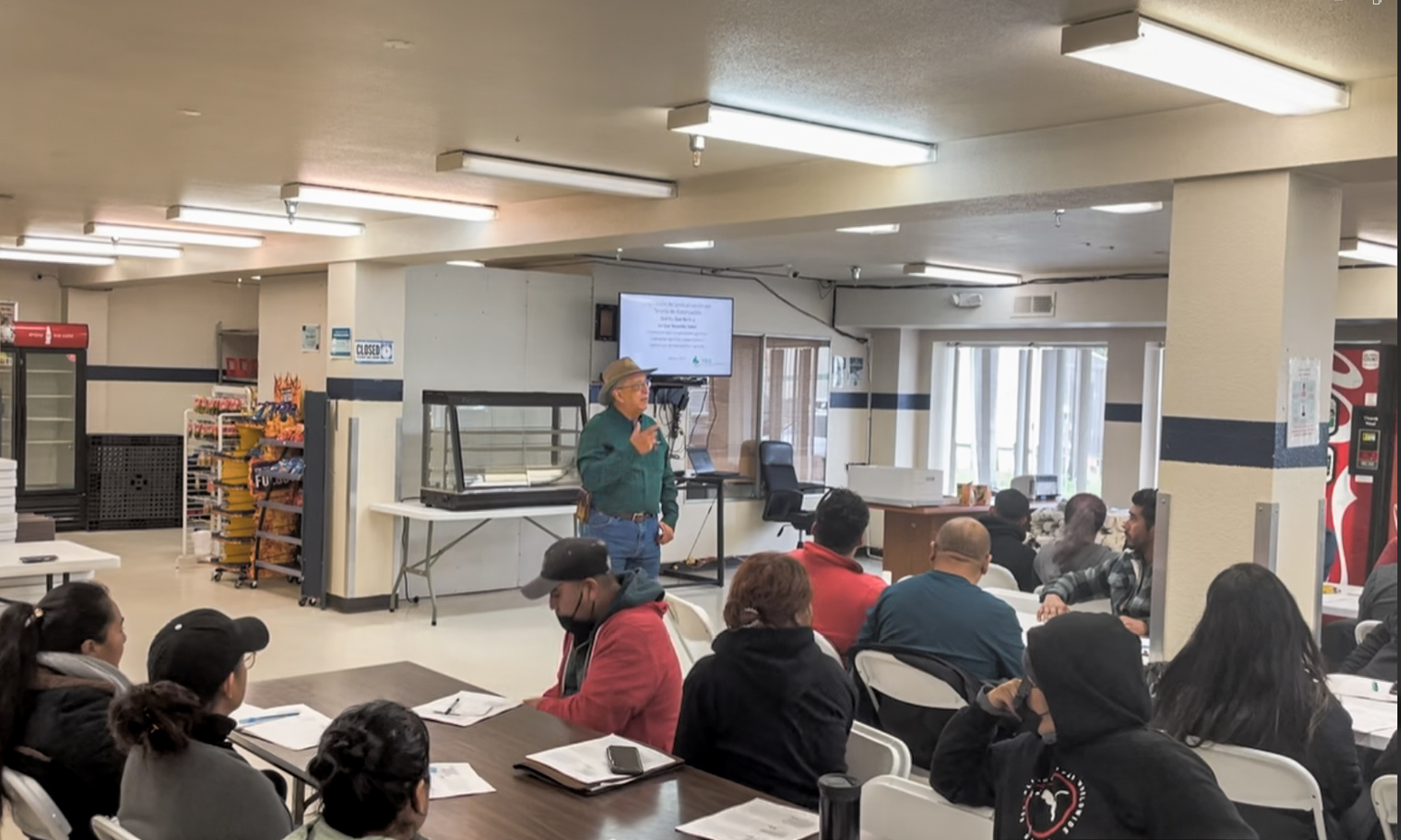
One of the first things inspectors verify is whether pesticide handlers have received the required annual training. But training isn’t just about checking a box once each year.
Every handler must receive annual pesticide safety training, and they must also be trained on the specific pesticide labels for every product they will handle.
Here’s a common situation: You complete your annual handler training in January. Mid-season you decide to add a new fungicide or herbicide to your spray program. Before an employee mixes, loads, or applies that new product, they must receive training on that label.
Think of your annual training as the foundation. Every new pesticide label added throughout the season becomes another building block.
Remember: The Label Is the Law
One of the most common inspection items involves personal protective equipment.
When it comes to PPE, handlers must comply with both the pesticide label and California regulations found in Title 3 of the California Code of Regulations, Sections 6700 and following.
The pesticide label establishes the minimum PPE required for that product. If the label requires chemical-resistant gloves, eye protection, coveralls, or a respirator, those items aren’t suggestions—they’re legal requirements.
A good annual training session shouldn’t simply tell employees what PPE to wear. Instead, let them demonstrate it.
Have employees:
- Put on and remove chemical-resistant gloves correctly.
- Adjust and wear eye protection properly.
- Explain how PPE should be cleaned after use.
- Show where PPE is stored between applications.
Practical demonstrations build confidence and help supervisors verify that employees truly understand their expectations.
And let’s be honest—we’ve all seen it.
Safety glasses sitting on top of someone’s head.
Coveralls unzipped and tied around the waist.
Neither provides much protection when pesticide exposure occurs.
PPE only works when it’s worn correctly.
Plan for the Emergency Before It Happens
Another item inspectors will verify is the Emergency Medical Care Posting. Employers are required to identify emergency medical care in advance and have that information posted at the worksite during pesticide handling activities.
Laminate the emergency medical care information and attach it directly to the spray rig.
Place a durable weather-resistant sticker inside the cab of the tractor pulling the sprayer.
If an emergency occurs, nobody wants to waste valuable minutes searching for directions or contact information.
Think About Safety in Three Layers
One way to simplify pesticide safety is to ask three questions.
First: Can I prevent interaction between the employee and the hazard?
For example, applying pesticides from an enclosed cab creates an additional layer of dermal protection by reducing employee exposure. While enclosed cabs aren’t always an option, eliminating or minimizing exposure is always the best starting point.
Second: If exposure can’t be eliminated, have I provided the right protective barrier?
This is where PPE becomes critical. Chemical-resistant gloves, eye protection, coveralls, aprons, boots, and respirators all serve one purpose—to create a barrier between the handler and the pesticide.
Third: If something still goes wrong, am I prepared to respond?
That’s where your decontamination supplies come in.
Every pesticide handling operation should have an accessible decontamination site equipped with:
- At least 3 gallons of water per pesticide handler
- One pint of emergency eyewash
- Soap
- Single-use towels
- An extra set of clean coveralls
- At the mix and load site, eyewash station capable of running water for 15 mins or at least 6 gallons
Having these supplies immediately available can significantly reduce the severity of an accidental exposure.
Put Yourself Through a Mock Inspection
Pesticide compliance can feel overwhelming because there are many moving parts. Fortunately, DPR has already provided a roadmap.
The same PR-ENF-104 inspection form used by County Agricultural Commissioner inspectors is available for employers to review. It walks through the very items inspectors evaluate during pesticide use monitoring inspections—from handler training and labeling to PPE, decontamination facilities, emergency medical care postings, and equipment safety.
Consider printing a copy and conducting a mock inspection with your own team.
Ask yourself:
- Are handler training records current?
- Have employees been trained on every pesticide label they’ll use this season?
- Is PPE available, maintained, and being worn correctly?
- Is emergency medical care posted?
- Is the decontamination site fully stocked?
Would your operation pass today?
If you’re unsure—or if all these compliance requirements feel like a lot to manage, remember that you don’t have to do it alone. FELS can help with sample policies, training resources, compliance guidance, and on-site handler training delivered by one of our qualified Labor Management Consultants. Sometimes an outside set of experienced eyes is all it takes to identify small improvements before they become costly citations.
After all, the goal isn’t simply passing an inspection. It’s ensuring every employee who handles pesticides has the knowledge, equipment, and resources to work safely and return home healthy every day.
Farm Employers Labor Service, an affiliated company of the California Farm Bureau; partnering for compliance and human resources management with California farm employers since 1970.